TFAS Law Fellowship

Apply Now
elm-pg-billboard-cta supreme-court-gty-jef-251203_1764787014905_hpMain_16x9_1600

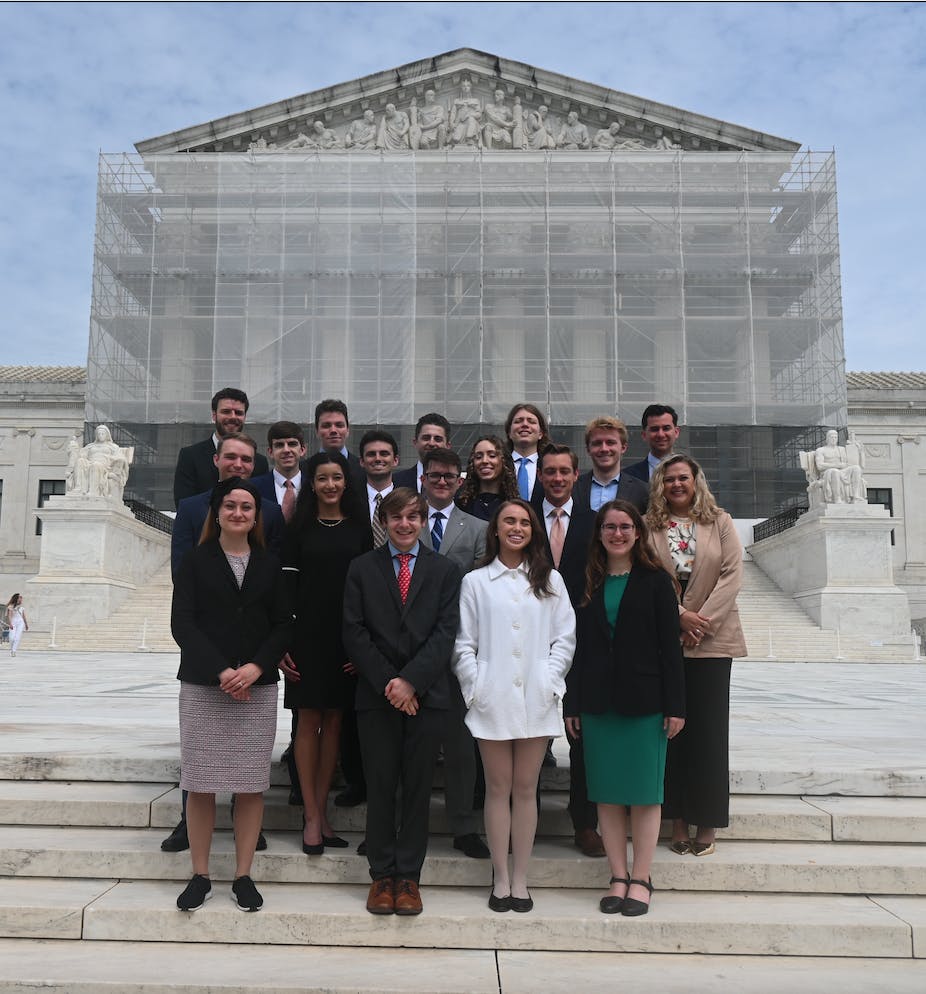
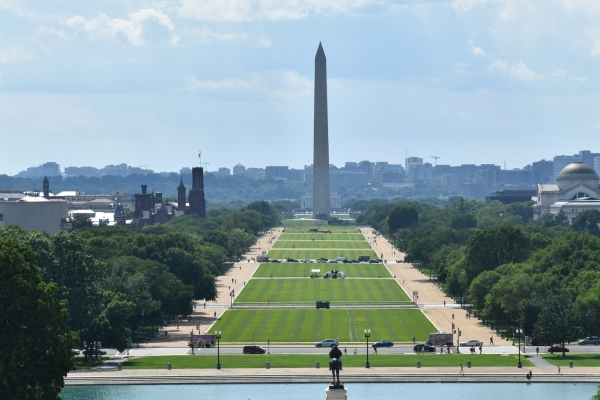
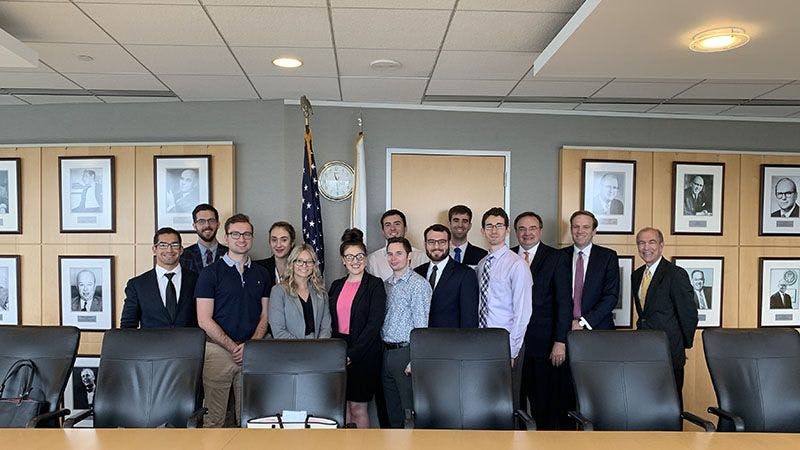
The TFAS Summer Law Fellowship in Washington, D.C., is an intensive nine-week program that prepares law students to defend the values and ideals of a free society rooted in individual liberty, limited government, free enterprise and constitutional originalism.


Through this immersive academic and professional experience, participants will engage in legal internships, academic coursework, networking events and career development sessions, as well as a law and public policy lecture series with leading constitutional scholars, judges and practicing attorneys.


Those selected to participate in the Fellowship program will receive a full scholarship covering tuition and housing. A program fee of $400 will be due upon enrollment. Awards are highly selective – only 25-30 students are selected to participate each year.


>> Click here to see the 2025 Law Fellows.


Application Deadline: February 19, 2026

Smart Teaser

Legal internships with private law firms, lobbying firms, public interest legal organizations and legal departments of trade associations, corporations and government agencies throughout the Washington, D.C., area. 

Smart Teaser

Two 1-credit courses from Scalia Law on Constitutional Originalism and Law & Economics. 

Smart Teaser

Explore various practices of law through a series of sessions with practicing attorneys representing a diverse array of legal career paths. Workshops will be held to help prepare participants for success in their law careers, and planned networking events will facilitate professional interaction with potential future employers. 

Academics

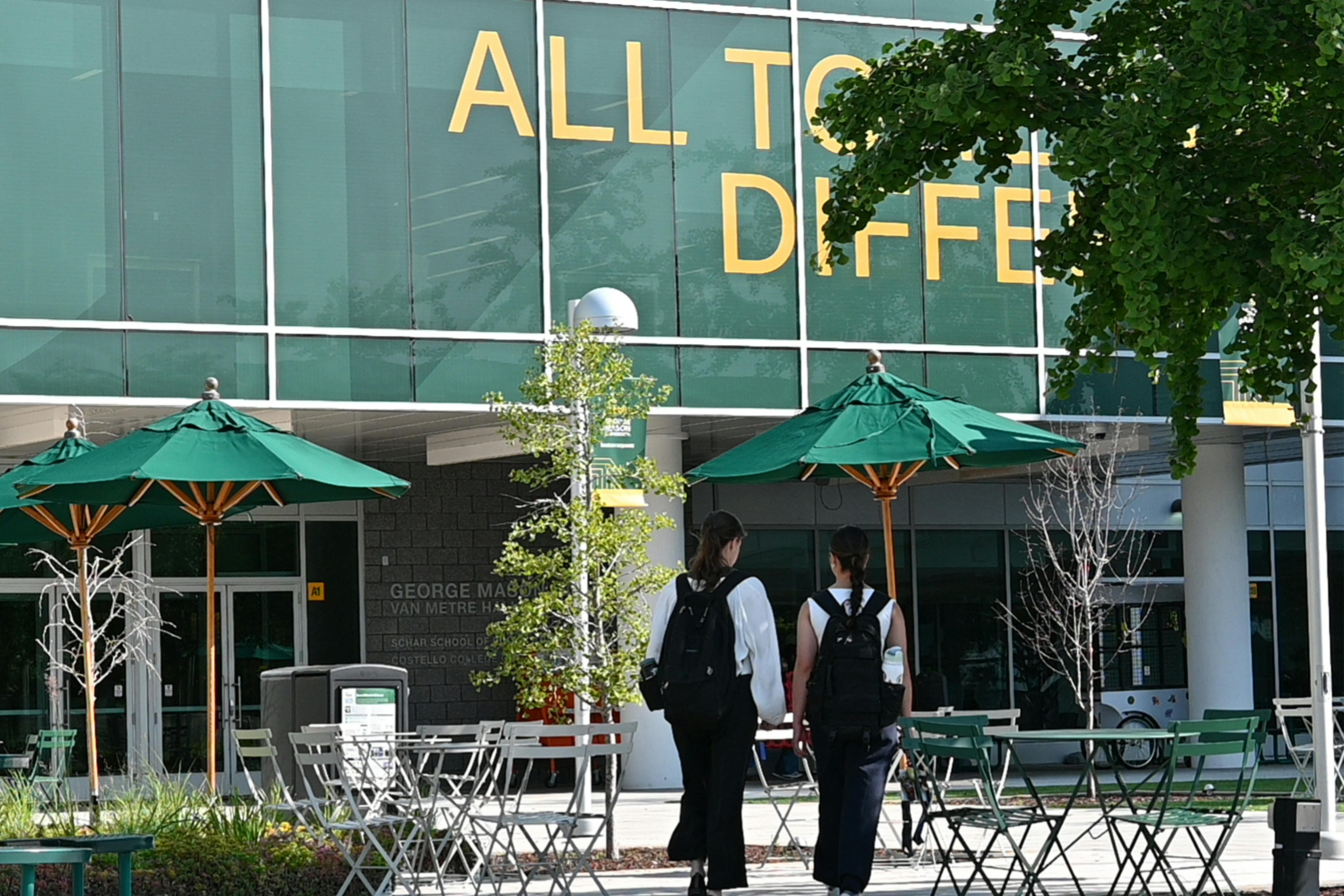
Students earn 2 credits from George Mason University's Scalia Law School. Students will take two 1-credit courses from Scalia Law on Constitutional Originalism and Law & Economics, exploring the theory and practice of originalism as a method of constitutional interpretation and the economic foundations of key legal principles provide a unique perspective on the importance of limited government and free enterprise in shaping today’s law and policy.

  • Class meetings are held in Arlington, VA, conveniently accessible via Metro.
  • You'll receive a GMU transcript. After the program, you can request your transcript from the registrar’s office.

Law & Policy Briefings

Hear from prominent judges, lawyers and judicial scholars. Previous guest speakers have included: 

  • The late Supreme Court Justice Antonin Scalia
  • Former Attorneys General Michael Mukasey and Edwin Meese
  • Former U.S. Solicitor General Paul Clement
  • 6th U.S. Circuit Court of Appeals Judge Chad Readler
  • 5th U.S. Circuit Court of Appeals Judge Jennifer Elrod
  • 11th U.S. Circuit Court of Appeals Judge Lisa Branch
  • U.S. District Court in Washington, D.C. Judge Douglas Ginsburg
  • U.S. District Court in Washington, D.C. Judge Trevor McFadden
  • Constitutional scholars Randy Barnett and Ilya Shapiro

Professor

Judge Greggory Maggs

U.S. Court of Appeals for the Armed Forces


Course Description
The course will explore the principles of originalism as a method of constitutional interpretation, tracing its development from the American Founders to the present day. Students will be exposed to the history, origins, and competing theories of originalism, as well as its practical application in landmark cases before the Supreme Court.

Professors

Donald Kochan and James Cooper

Scalia Law


Course Description
The course will provide a survey of foundational economic principles and the economic way of thinking from which to examine the economic concepts that underpin key areas of property law, antitrust law, constitutional law and administrative law. Students will receive a basic grounding in fundamental economic principles and their relationship to core legal practices.

Judge Gregory E. Maggs

Gregory E. Maggs was appointed a judge on the U.S. Court of Appeals for the Armed Forces on February 1, 2018.


He was a member of the full-time faculty of the George Washington University Law School from 1993 until his judicial appointment in 2018. He served as the Interim Dean of the law school from 2010-2011 and from 2013-2014, as the Senior Associate Dean for Academic Affairs from 2008-2010, as the co-director of the law school’s National Security and U.S. Foreign Relations LLM program from 2010-2018. By vote of the graduating class, he received the law school’s Distinguished Faculty Service Award in 1997, 1998, 2004, 2005, 2011, 2012, 2013, 2014 and 2015. In 2012, the university gave him the George Washington Award for outstanding service. He was named the Arthur Selwyn Miller Research Professor of Law in 2017.


Judge Maggs is a graduate of Harvard College and Harvard Law School. He was a law clerk for Justices Clarence Thomas (1991-1992) and Anthony M. Kennedy (1989-1990) of the U.S. Supreme Court and for the late Judge Joseph T. Sneed of the U.S. Court of Appeals for the Ninth Circuit (1988-1989). He also taught for two years as an assistant professor at the University of Texas School of Law. His other experience includes service as a special master for the U.S. Supreme Court, a consultant to Independent Counsel Kenneth Starr in the Whitewater Investigation, and an assistant to the late Hon. Robert H. Bork in private practice and research. He is a member of the American Law Institute and was formerly a member of the Advisory Board for the Heritage Foundation’s Center for Legal and Judicial Studies.

Judge Maggs served in the U.S. Army Reserve, Judge Advocate General’s Corps, from 1990 until 2018. He retired in the rank of Colonel upon his appointment to the Court of Appeals for the Armed Forces. He was assigned as a trial or appellate military judge from 2007 until 2017. He is a graduate of the U.S. Army War College, the Joint and Combined Warfighting School, the Military Judge Course, the Command and General Staff Course, the Judge Advocate Officer Advanced and Basic Courses, the Air Assault School, and the Infantry Weapons Specialist Course. He was called to active duty in 2007-2008. In 2002, he received the Judge Advocates Association’s Outstanding Career Armed Services Attorney Award.


At George Washington, Judge Maggs has taught constitutional law, contracts, commercial paper, counterterrorism law, the law of software contracts, comparative contract law, secured transactions, and other subjects. He has written several books and many articles on these subjects.

James C. Cooper

Professor of Law; Director, Program on Economics & Privacy
Antonin Scalia Law School


James C. Cooper brings over a decade of public and private sector experience to his research and teaching. Prior to joining the faculty at Scalia Law, he served as deputy and acting director of the Federal Trade Commission’s Office of Policy Planning, advisor to Federal Trade Commissioner William Kovacic, and as an associate in the antitrust group of Crowell & Moring, LLP. Professor Cooper returned to the FTC in 2018-19 to serve as a deputy director in the FTC’s Bureau of Consumer Protection. His research focuses on the law and economics of privacy, data security and consumer protection, as well as on a wide variety of topics surrounding competition policy. It regularly appears in top academic journals, such as the Journal of Law & Economics, International Review of Law & Economics, Journal of Regulatory Economics, Antitrust Law Journal, and the Virginia Journal of Law & Technology. Professor Cooper has a Bachelor of Arts from the University of South Carolina, a Ph.D. in economics from Emory University, and his law degree, magna cum laude, from the Antonin Scalia Law School at George Mason University, where he was a Levy Fellow and a member of the George Mason Law Review.

Donald J. Kochan

Professor of Law; Executive Director, Law & Economics Center
Antonin Scalia Law School


Donald Kochan is Professor of Law and Executive Director of the Law & Economics Center (LEC). Professor Kochan is an elected member of the American Law Institute (ALI) and serves as an Adviser to ALI’s Restatement of the Law Fourth, Property project. Professor Kochan is a Nonresident Scholar at the Center for the Constitution at Georgetown University Law Center, where he was a Visiting Scholar in residence during Fall 2018. Before joining the Antonin Scalia Law School faculty, he was the Parker S. Kennedy Professor in Law at Chapman University’s Dale E. Fowler School of Law from 2004 to 2020. From 2003 to 2004, Professor Kochan was an Olin Fellow at the University of Virginia School of Law. During 2002-2003, he was a Visiting Assistant Professor of Law at George Mason’s Scalia Law School.


Professor Kochan’s scholarship focuses on areas of property law, constitutional law, administrative law, local government law, natural resources and environmental law, and law & economics. He has published several books and more than 50 scholarly articles and essays in well-regarded law journals. His work has been cited in more than a dozen state and federal court opinions, in more than 75 briefs filed in state and federal courts, including more than 25 filed in the U.S. Supreme Court, in dozens of books and treatises, and in more than 800 scholarly articles.


Professor Kochan received his JD from Cornell Law School, where he was a John M. Olin Scholar in Law and Economics and managing editor of the Cornell International Law Journal. During law school, he also served as editor and executive editor of the Harvard Journal of Law & Public Policy symposium issues in 1997 and 1998. He received his BA from Western Michigan University, magna cum laude, with majors in both political science and philosophy, where he studied as the John W. Gill Medallion Scholar and was honored as the Presidential Scholar (awarded to the top graduate in the political science department).


After graduating from law school, Professor Kochan was a law clerk to The Honorable Richard F. Suhrheinrich of the United States Court of Appeals for the Sixth Circuit. Following his clerkship, Professor Kochan was an associate with the firm of Crowell & Moring LLP in Washington, D.C., where he specialized in natural resources & environmental law as well as tort, products, and consumer civil litigation & legislative affairs.

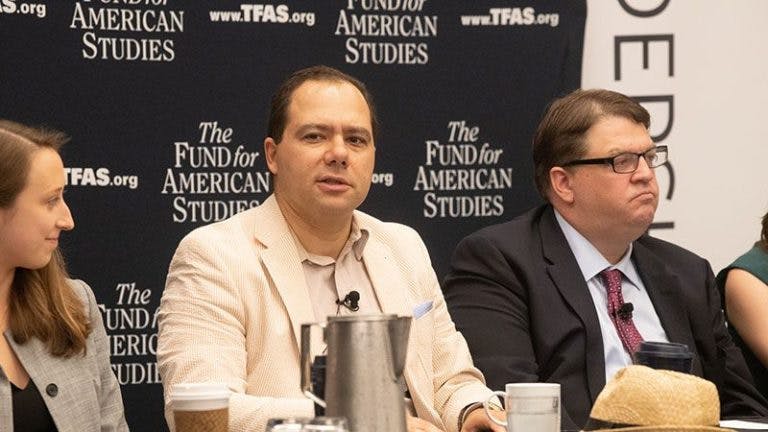
TFAS Summer Law Fellows will participate in a weekly lecture series with leading scholars, judges and attorneys on salient issues in law and policy, and the principles of limited government and free enterprise. The lectures are designed to complement the coursework on originalism and law & economics and provide an opportunity to network with leading public policy experts and legal minds in the law and liberty movement. Recent guest lecturers have included:


  • Former Attorneys General Edwin Meese and Michael Mukasey
  • Honorable Mike Pence, 48th Vice President of the United States
  • Judge James L. Buckley, American Jurist, Politician, Civil Servant, Attorney, Businessman, and Author
  • Honorable Paul Clement, 43rd U.S. Solicitor General
  • Honorable Eugene Scalia, 28th U.S. Secretary of Labor
  • Hester Peirce, Commissioner, U.S. Securities & Exchange Commission
  • Former U.S. Deputy Attorney General Rod J. Rosenstein 
  • Allen Dickerson, Commissioner and Vice Chair, Federal Election Commission
  • Brian Rabbitt, former Acting Assistant Attorney General for DOJ’s Criminal Division
  • Michael Huston, Assistant to the Solicitor General, DOJ
  • Ilya Shapiro, Director of Constitutional Studies, Manhattan Institute
  • Mark Chenoweth, President and Chief Legal Officer, New Civil Liberties Alliance 
  • Randy Barnett, Patrick Hotung Professor of Constitutional Law, Georgetown University Law Center
  • Adam Liptak, Supreme Court correspondent, The New York Times
  • Todd Gaziano, President, Center for Individual Rights
  • Yuval Levin, Senior Fellow, American Enterprise Institute
  • Tom Jipping, Senior Legal Fellow, Edwin Meese III Center for Legal and Judicial Studies, Heritage Foundation
  • Prof. Hadley Arkes, Founder, James Wilson Institute
  • Bradley Smith, Institute for Free Speech and former FEC Chairman
  • Former ACLU President, Nadine Strossen
  • Prof. Stephen Vladeck, Lawfare founding member and Professor of Law, University of Texas School of Law
  • Prof. Ilya Somin, Antonin Scalia Law School at George Mason University
  • Lori Windham, Vice President and Senior Counsel, Becket
  • Casey Mattox, Vice President for Legal and Judicial Strategy, Americans for Prosperity
  • Gene Healy, Vice President, Cato Institute
  • Diana Simpson, Attorney, Institute for Justice
  • Clark Neily, Senior Vice President for Legal Studies, Cato Institute
  • David French and Sarah Isgur, Advisory Opinions Podcast
  • Prof. Josh Blackman, South Texas College of Law
  • Darpana Sheth, Vice President of Litigation, Foundation for Individual Rights & Expression

TFAS aims to enhance the philosophical and practical understanding of law in the United States by exposing the Law Fellows to top legal minds. The “Thoughts from the Bench” discussion series features intimate conversations with some of the nation’s leading federal judges. Judges share practical advice on judicial clerkships, tips for career advancement, and instructive and sage insights on originalist jurisprudence. Past participants include:


  • Judge Douglas Ginsburg, U.S. Court of Appeals, D.C. Circuit 
  • Judge Trevor McFadden, U.S. District Court for the District of Columbia
  • Judge Neomi Rao, U.S. Court of Appeals, D.C. Circuit
  • Judge Stephanos Bibas, U.S. Court of Appeals, 3rd Circuit 
  • Judge Jennifer Elrod, U.S. Court of Appeals, 5th Circuit
  • Judge Andrew Oldham, U.S. Court of Appeals, 5th Circuit
  • Judge Don Willett, U.S. Court of Appeals, 5th Circuit
  • Judge Ryan Nelson: U.S. Court of Appeals 9th Circuit
  • Judge Amul Thapar, U.S. Court of Appeals, 6th Circuit
  • Judge Chad Readler, U.S. Court of Appeals, 6th Circuit
  • Judge Michael Brennan, U.S. Court of Appeals, 7th Circuit
  • Judge Lisa Branch, U.S. Court of Appeals, 11th Circuit
  • Judge Ryan Holte, U.S. Court of Federal Claims
  • Judge Gregory Maggs, U.S. Court of Appeals for the Armed Forces


Professional Development

As part of the TFAS Summer Law Fellowship professional development program, you will attend private briefings with members of the judicial, legislative and executive branches, and meet with prominent judges, lawyers and judicial scholars that will help you develop a strong professional network and advance you in your legal career.

Site Briefings

Tours, briefings and meetings with members of such institutions as:

  • House Judiciary Committee
  • United States Supreme Court
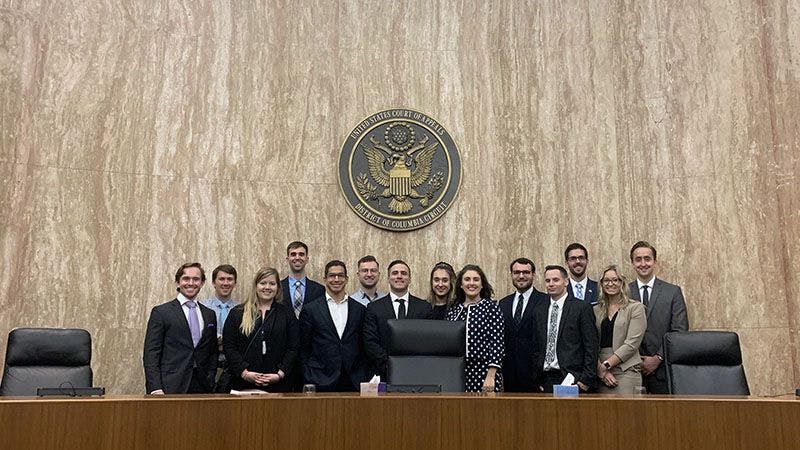
  • U.S. Court of Appeals
  • U.S. Department of Justice
  • U.S. Department of State
  • U.S. Securities and Exchange Commission

As well as practitioners within various practice areas, including:

  • Appellate law
  • Campaign finance and election law
  • Immigration law
  • Intellectual property law
  • International law
  • Commercial litigation
  • Public interest law
  • Army JAG Corps
  • Judicial Clerkships
  • First Amendment law

Attorney Mentor Program

One of the most valuable aspects of the TFAS Summer Law Fellowship professional development component is the Attorney Mentor Program through which Fellows are paired with an experienced lawyer who will serve as a professional mentor throughout the summer and beyond. Mentors are available to provide career advice and networking contacts, as well as tips for living in D.C. and recommendations for the best spots in the city for food and entertainment activities. Mentor matches are made based on a Fellow’s career goals, professional interests and other factors such as law school or hometown.

Artboard 1
Each week was filled with lectures and professional development sessions led by the nation’s top legal scholars. On frequent occasions, I had to remind myself that I was sitting two seats away from men and women I have long looked up to for the past number of years.”
Artboard 2
-
MARK METREY

University of Maryland School of Law

TFAS partners with George Washington University to offer housing in District House on its campus in the Foggy Bottom neighborhood of D.C. Foggy Bottom was given its name due to its location on the foggy banks of the Potomac River. As one of the oldest neighborhoods in the city, it is home to:

  • Kennedy Center for the Performing Arts
  • Watergate Complex
  • State Department
  • World Bank
  • International Monetary Fund
  • Many restaurants and shops

Fellows will be assigned to a double-occupancy bedroom in a suite with full kitchen facilities, a living room and a bathroom shared by 4 residents. A single-occupancy bedroom within a suite may be secured for an additional fee. 


TFAS housing is optional. Students not comfortable living in a dorm environment are encouraged to find accommodations elsewhere. Students opting out of TFAS housing must let TFAS know by April 1, 2026, and will receive a $1,200 housing stipend upon the start of the program.

Law Fellows attend an orientation session and networking reception at the beginning of the summer, where they meet TFAS staff and alumni of the Summer Law Fellowship. Below is a tentative TFAS Summer Law Fellowship schedule, including program dates and a sample weekly schedule to provide a preview of the summer’s general structure.


Program Dates

Fellows should plan to arrive on Sunday, May 24. Fellows planning to live in program housing will be allowed to check into their apartments between 9:00 AM – 5:00 PM. Orientation and program activities will begin on Tuesday, May 26. No programming will be held on Monday, May 25, in observance of Memorial Day. Fellows are encouraged to explore the city and enjoy the many Memorial Day observances. Fellows will be required to vacate the apartments by 10:00 AM on Saturday, July 25. Further details on arrival logistics, registration and orientation will be provided as the summer approaches.

This schedule is only meant to be an example of the summer’s general structure. It is subject to change according to events and briefings. There may also be select optional events during the workday. You will receive updated weekly schedules by email throughout the summer.


Class will begin with an initial day-long set of sessions on Tuesday, May 26, through Friday, May 29, from 10:00 AM to 2:00 PM (with a lunch break included) and 6:00 PM to 7:30 PM on May 28 through May 29. This will constitute the duration of the course on originalism and the first three class sessions of the Law & Economics course. Thenceforth, class will be held once a week on Tuesdays from 7:00 PM – 9:00 PM. Special “Sights and Sounds of Washington” activities will be planned for the afternoons of that first week. As such, students should not plan to start their internships until the week of June 1.


Monday

9:00 AM – 5:00 PM: Internships (Internships begin Monday, June 1)

6:30 PM – 7:30 PM: Guest Lecture/Professional Development Session


Tuesday

9:00 AM – 5:00 PM: Internships

7:00 PM – 9:00 PM: Class - Law & Economics


Wednesday

9:00 AM – 5:00 PM: Internships

6:30 PM – 7:30 PM: Guest Lecture/Professional Development Session


Thursday

9:00 AM – 5:00 PM: Internships

6:30 PM – 7:30 PM: Guest Lecture/Professional Development Session


Friday

9:00 AM – 5:00 PM: Internships


Saturday & Sunday

Optional weekend activities may include touring Mt. Vernon, attending a Washington Nationals baseball game or visiting one of the many other museums or cultural and historical landmarks in D.C.


Click here for a copy of last year’s TFAS Summer Law Fellowship schedule.

TFAS Summer Law Fellows are required to participate in a legal internship for the duration of the program. Fellows are encouraged to find their own internship; however, TFAS staff will work with each Fellow in need of assistance to help identify and secure the most fitting internship based on professional interests and experience.


Fellows will work approximately 30-40 hours a week during the program. While each internship is unique, typical duties include writing legal briefs and memoranda, conducting legal research, attending and summarizing depositions, covering hearings on Capitol Hill and other substantive law and policy work that can be equally career-enriching.


Legal Internships Questionnaire

Fellows will be asked to fill out a detailed internship questionnaire upon enrolling in the program. This form gives you the chance to identify the type of legal organizations you are interested in pursuing and rank issues of interest. You will also submit a brief written statement describing the type of work and practice areas you would most like to pursue.

  • Advancing American Freedom
  • Alliance Defending Freedom
  • American Conservative Union
  • American Legislative Exchange Council
  • Americans United for Life
  • Baker & Hostetler LLP
  • Barr & Klein PLLC
  • BNA’s Patent, Trademark & Copyright Journal
  • Caterpillar Inc.
  • Cato Institute
  • Cause of Action
  • Center for Individual Rights
  • Coast Guard JAG
  • Committee for Justice
  • Consumer Product Safety Commission
  • U.S. Court of Federal Claims
  • County Executives of America
  • D.C. Superior Court
  • Family Research Council
  • Federal Communications Commission
  • Federal Emergency Management Agency
  • Federal Maritime Commission
  • Foundation for Individual Rights & Expression
  • Freedom Forum Institute
  • Global Antitrust Initiative
  • Global Liberty Alliance

  • Healthcare Leadership Council
  • House Judiciary Committee
  • U.S. Department of Health and Human Services
  • U.S. Senate Committee on the Budget
  • Institute for Free Speech
  • Institute for Justice
  • Liberty & Law Center
  • Manhattan Institute
  • Media Research Center
  • Napa Legal Institute
  • National Right to Work Legal Defense Foundation
  • New Civil Liberties Alliance
  • Pacific Legal Foundation
  • Public Interest Legal Foundation
  • Quarles & Brady, LLP
  • Republican Governors Association
  • Ropes & Gray LLP
  • Staas & Halsey LLP
  • Stein IP LLC
  • TechFreedom
  • Tiber Hudson
  • Utz Brands Inc. – Office of General Counsel
  • U.S. Commodity Futures Trading Commission
  • Vorys, Sater, Seymour and Pease, LLP
  • Ward & Berry PLLC

Policies 

All participants must view and sign The Fund for American Studies program policies upon enrollment. This includes the Attendance Agreement, which is included in the online enrollment form, as well as a Code of Conduct agreement that will be signed upon arrival. Please click on the link below to view the policies for the Summer Law Fellowship. 

>> Summer Law Fellowship Policies

Application Checklist 
>> View the TFAS application checklist here!  

Application Deadline: February 19 

Selection Deadline: February 26 

Enrollment Deadline: March 5 


Eligibility 

All law students over the age of 18 in good standing from an ABA-accredited law school are eligible to apply to the Summer Law Fellowship. 


Selection Criteria 

Competitive candidates will have a strong academic record with a GPA of 3.0 or higher, demonstrated interest in the principles of originalism, limited government and free enterprise, and commitment to honorable leadership and the values essential to the preservation and success of a free society. 


Selected fellows receive a full scholarship covering tuition and housing. A program fee of $400 will be due upon enrollment. 


Summer Law Fellowship Estimated Living Costs 
(actual costs may vary and are not covered by the Fellowship): 

Program Fee: $400 (due upon enrollment) 
Food: $1,500 - $2,000 (depending on personal preferences)
Personal Expenses: $1,000 - $1,500 (entertainment, travel to/from internship, etc.) 
Transportation to Washington: Based on the distance to Washington and the type of travel 

The TFAS Summer Law Fellowship Board of Visitors is comprised of prominent legal professionals. They voluntarily assist in planning and fundraising for the Summer Law Fellowship and offer their support with guest lecturers and internship placements. Their focus is to ensure that all Fellows leave with an enhanced understanding of the principles that underpin a free society and have a valuable experience that will benefit their future career goals. 

  • Randy E. Barnett
    Patrick Hotung Professor of Constitutional Law
    Georgetown University Law Center
  • Ryan Bradel
    Partner
    Ward & Berry PLLC
  • Frank Garrison, Law ’14
    Attorney
    Pacific Legal Foundation
  • Todd Gaziano
    President, Center for Individual Rights
    Pacific Legal Foundation
  • Hon. Douglas H. Ginsburg
    Senior Judge
    U.S. Court of Appeals – D.C. Circuit
  • Andrew Grossman
    Partner
    BakerHostetler
  • Josh Holdenried, PPF ’18
    Executive Vice President
    Teneo Network
  • Thomas Jipping
    Deputy Director of the Edwin Meese III 
    Center for Legal and Judicial Studies
    Senior Legal Fellow at The Heritage Foundation
  • Kevin King
    Partner
    Covington & Burling LLP
  • Gregory R. Lyons
    Technology, Patent and IP Law Consultant
  • Hon. Edwin Meese III
    Ronald Reagan Distinguished Fellow
    Chairman, Center for Judicial and Legal Studies
    The Heritage Foundation
  • Daniel D. Polsby
    Dean and Professor Emeritus of LawAntonin Scalia Law School
  • Brian Rabbitt
    Partner, Jones Day and former Acting Assistant Attorney General
    DOJ Criminal Division


  • Jeremy A. Rabkin
    Professor of Law
    Antonin Scalia Law School
  • Hon. Chad Readler
    Judge
    U.S. Court of Appeals for the Sixth Circuit
  • Peter K. Redpath
    Vice President & Director of Student Division
    The Federalist Society
  • Ilya Shapiro
    Senior Fellow and Director of Constitutional Studies
    Manhattan Institute
  • Diana Simpson, Law ’09
    Staff Attorney
    Institute for Justice
  • Lori Windham ’00
    Vice President and Senior Counsel
    Becket Law
  • Luke Zaro ’15
    Senior Counsel
    House Judiciary Committee

ALUMNI ADVISORS:

  • Jacob Altik, Law ’19
    Michigan Law
  • Luke Bunting, Law ’20
    Georgetown Law
  • Glynis Gilio, Law ’19
    Michigan State Law
  • Tabitha Kempf, Law ’20
    Catholic University, Columbus School of Law
  • Heather McGuire, Law ’20
    American University, Washington College of Law
  • Nathaniel Obinwa, Law ’20
    University of Richmond School of Law
  • Oliver Roberts, Law ’19
    Harvard Law
  • Sarah Smerling, Law ’19
    Antonin Scalia Law School, George Mason University
  • Christian Townsend, Law ’19
    Indiana University Maurer School of Law

DISCLAIMER: Members of the TFAS Summer Law Fellowship Board of Visitors serve in a personal capacity and do not represent their listed employers.